
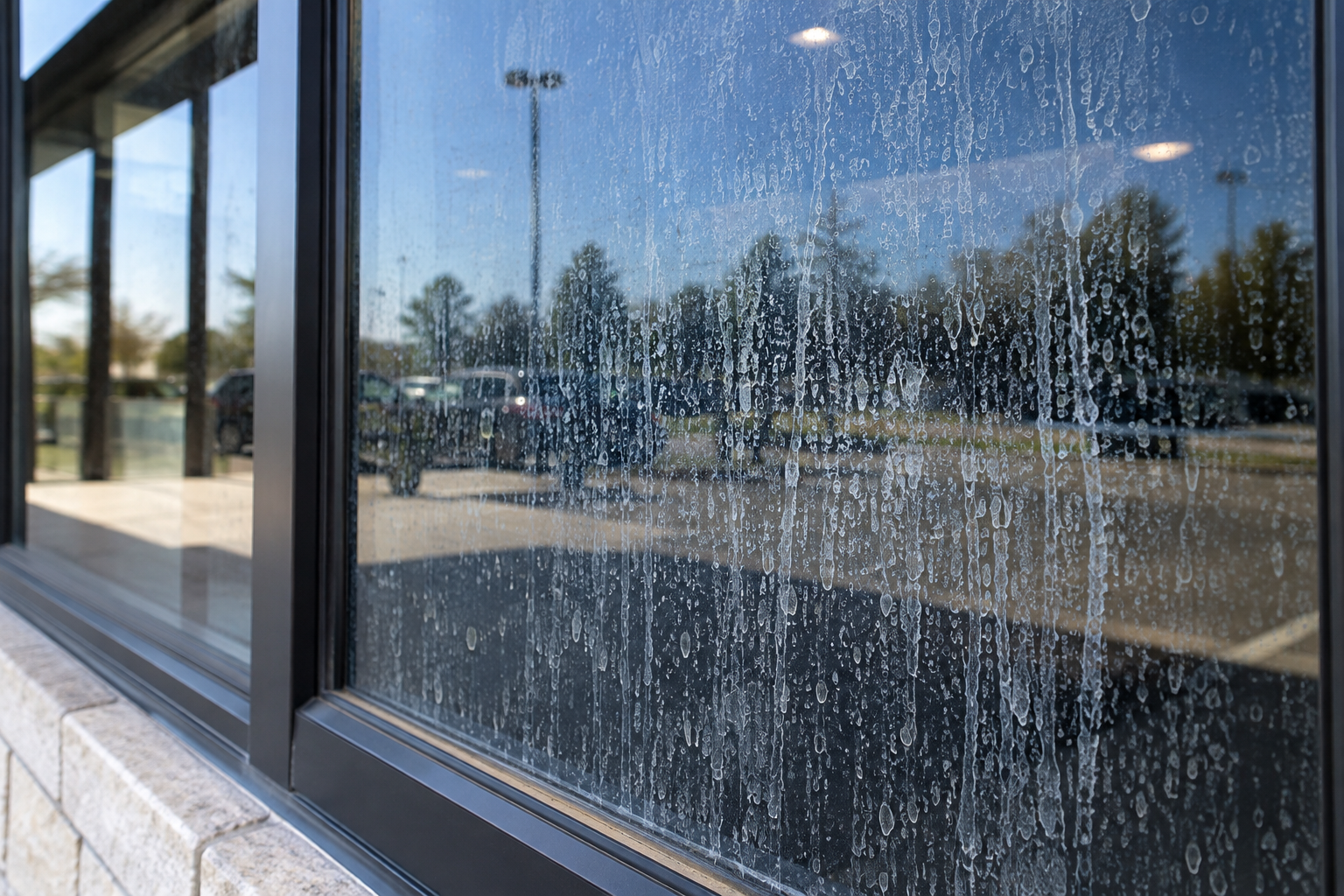
Glass that has not been cleaned in years may look permanently damaged, but appearance alone does not tell the whole story. Heavy dirt, building runoff and mineral deposits can hide the condition of the surface. Some windows need a thorough first-time cleaning. Others require restoration. A smaller number are scratched, etched or damaged beyond what cleaning can correct.
The best way to find out is to inspect the glass in person and test a small area.
Richard Hulsey, operations manager for Squeegee Squad Tulsa, said a finger swipe can sometimes reveal whether the visible haze is loose surface dirt. It is only a starting point. Once the upper layer is removed, the crew may find mineral deposits or staining underneath.
What builds up on neglected commercial windows?
Commercial glass collects more than dust. After several years, a window may be covered by layers from several sources:
- Windblown dirt and construction dust
- Sprinkler overspray
- Runoff from concrete, stucco, metal or painted surfaces
- Air conditioner drainage or splash
- Paint or construction residue
- Insects and spider debris
- Oils and airborne pollutants
- Minerals left behind when water evaporates
The source often leaves a clue. Vertical trails may point to runoff from the building. Concentrated spots near the bottom of a window may come from sprinklers or a dripping air conditioner. A uniform haze may be dirt, residue or a change to the glass surface itself.
Richard said some of the most obvious problem areas have off-white trails running down the glass. Those marks may contain calcium, lime, paint residue or other material carried from the façade.
Some can be removed. Others have remained on the surface long enough to require restoration.
Each side of the building may have a different problem
Window condition can vary across the same property.
Glass facing south or west generally receives more direct sunlight. When mineral-laden water repeatedly dries on those windows, heat can make the deposits more difficult to remove.
Shaded areas may collect more cobwebs, insect debris and organic buildup. A wall beside a construction site or wind corridor may receive more dust than the protected side of the building.
Landscaping also matters. One sprinkler aimed slightly too high can leave a concentrated band of mineral deposits across several windows. Correcting the sprinkler before cleaning prevents the same stain from returning.
When requesting an assessment, tell the window cleaner about:
- Sprinklers that hit the building
- Air conditioner runoff
- Known window or frame leaks
- Recent painting or construction
- Areas with heavy sun exposure
- Windows that look different from the rest of the building
Those details help the company decide where to inspect and whether a standard cleaning is likely to be enough.
Surface dirt, staining and glass failure are different problems
A cloudy window can have several causes. Each calls for a different response.
Surface dirt
Dust, fingerprints, loose debris and routine grime sit on the exposed surface. A maintenance cleaning should remove them.
Heavy buildup
A window that has been neglected for years may need more scrubbing and more than one pass. This is often treated as a first-time cleaning because it requires more work than the recurring service that follows.
Mineral staining
Hard-water deposits remain after water evaporates. Sprinklers and building runoff are common sources. These deposits may bond with the surface and require a separate restoration process.
Architectural glass manufacturer Vitro warns that hard-water salts and runoff from masonry or metal can become difficult to remove and may cause permanent staining when allowed to remain on glass. Vitro’s glass-cleaning guidance recommends removing that runoff promptly.
Scratches or etching
Scratches are physical damage. Etching or corrosion changes the surface of the glass. Some affected glass can be improved through professional restoration, but the result depends on the depth and type of damage.
Seal failure
Haze or moisture between two panes cannot be removed by cleaning the exposed surfaces. It may indicate a failed insulated glass unit. That window should be evaluated for repair or replacement.

Why we test a small section first
A test cleaning shows what the finished glass is likely to look like before the property authorizes work across the entire building.
The crew may compare:
- The untreated glass
- The result after maintenance cleaning
- The result after a restoration sample
This helps answer two questions: What can be removed, and what level of service will be required?
It also prevents a common misunderstanding. If a property authorizes maintenance cleaning on glass that needs restoration, the dirt may come off while the mineral staining remains. The windows will be cleaner, but they may not look clear.
A sample allows the property manager to see that difference before approving the scope and budget. Vitro also recommends test-cleaning a small area in daylight before proceeding across a larger glass surface.
What does restoration involve?
Restoration begins with cleaning. The crew has to remove surface dirt before it can evaluate and treat what remains.
Depending on the condition, the process may include:
- An initial maintenance cleaning
- Additional scrubbing for built-up dirt
- Treatment for mineral deposits
- Spot treatment for stubborn staining or etching
- A final cleaning to remove restoration residue
Each step builds on the one before it. A crew cannot treat the underlying stain effectively while years of dirt are still covering it.
A large restoration may take several days, but it can usually be completed as one scheduled project. Planning the full scope in advance prevents the crew from arriving for a standard cleaning and discovering midway through the work that the property wants restoration added.
When is replacement necessary?
Replacement may be the practical choice when the glass is broken, deeply scratched, severely etched or affected by failed seals. Heavy concrete or construction material can also leave damage that restoration cannot correct without creating distortion or a frosted appearance.
Replacement should not be the first assumption simply because a window looks terrible from the ground.
Richard recommends exhausting reasonable cleaning and restoration options before replacing intact glass. An inspection and sample may show that a window hidden behind years of buildup can still be recovered.
The property manager can then compare the restoration result and cost with the price of new glass.
Aggressive cleaning can make the damage worse
A cloudy window often tempts people to reach for a scraper, abrasive pad or stronger chemical. That experiment can turn removable buildup into permanent scratches or chemical staining.
The correct method depends on the glass, coating and contaminant. A product that works on uncoated glass may harm film or an exposed coating. Dirt trapped beneath an abrasive tool can also scratch the surface as it moves.
The Fenestration and Glazing Industry Alliance advises against razor blades, steel wool, abrasive pads and cleaners that may damage glass or finishes. Manufacturer instructions should guide the treatment, especially when the window has a coating or film.
Before restoration begins, tell the cleaning company about any known:
- Window film
- Low-emissivity or reflective coating
- Security coating
- Smart glass
- Previous restoration attempt
- Chemical spill
- Scratches or leaks
A professional should test the proposed method and set expectations before treating the full building.
Maintenance protects the restoration investment
Once neglected glass has been restored, it needs a recurring cleaning schedule. Otherwise, the same runoff, sprinkler overspray and airborne dirt begin accumulating again.
Squeegee Squad Tulsa generally recommends commercial window cleaning at least four times a year after restoration. Some buildings need more frequent service because of traffic, landscaping, nearby construction or the amount of glass exposed to weather.
Vitro recommends cleaning certain exterior-facing coated glass three to four times per year and removing masonry or metal runoff as soon as it appears.
Recurring service also gives the crew a chance to notice changes early. A new sprinkler stain is easier to address than years of mineral buildup. A developing leak can be reported before it affects a larger area.
Questions to ask before approving glass restoration
Ask the window-cleaning company:
- Will you inspect the glass in person?
- Can you provide a test cleaning or restoration sample?
- What type of buildup do you believe is present?
- What result should we expect from maintenance cleaning?
- What additional improvement could restoration provide?
- How will you protect coated or specialty glass?
- Is the restoration method consistent with the manufacturer’s instructions?
- Are any scratches, failed seals or other conditions outside the cleaning scope?
- How long will the project take?
- What maintenance schedule do you recommend afterward?
The proposal should distinguish cleaning from restoration and explain what cannot be corrected.
Frequently asked questions
Can windows that have not been cleaned in years still be restored?
Often, yes. Heavy dirt and mineral deposits may look permanent from a distance. An inspection and test cleaning can show how much improvement is possible.
How can I tell whether cloudy commercial glass is dirty or damaged?
Wipe a small accessible area to see whether loose dirt moves, but do not use abrasive tools. A professional assessment is the safest way to identify staining, etching or seal failure.
What causes white stains on commercial windows?
Sprinkler overspray and building runoff can leave calcium, lime and other minerals behind as water evaporates. Paint, concrete and metal runoff can create similar trails.
Will routine window cleaning remove hard-water stains?
Not always. Routine cleaning removes surface dirt. Bonded mineral deposits may require a separate restoration process.
Can window cleaning remove haze between two panes?
No. Cleaning cannot reach moisture or debris inside a sealed glass unit. Haze between panes may indicate seal failure.
How often should restored commercial windows be cleaned?
Squeegee Squad Tulsa generally recommends at least quarterly service. Properties exposed to sprinklers, heavy traffic, construction or other contaminants may need more frequent cleaning.
Find out what is underneath the buildup
Years of neglect do not automatically mean the glass has to be replaced. The first step is determining what is sitting on the surface and what has happened to the glass underneath it.
Squeegee Squad Tulsa can inspect neglected commercial windows, test a small area and explain the difference between maintenance cleaning, first-time cleaning and restoration. Contact us for an assessment before assuming cloudy or stained glass is beyond saving.
Topics: