 By
By
Key Takeaways
- A larger building isn't automatically a more difficult window cleaning project. Access, architecture, surrounding obstacles, and glass placement can matter just as much as total size.
- Two windows at the same height may require completely different cleaning methods. Rooflines, overhangs, landscaping, ground conditions, and available anchorages can change how technicians reach the glass.
- Architecture can directly affect labor, equipment, safety planning, and ultimately the cost of the project.
When people think about what makes a commercial window cleaning job difficult, building size is usually the first thing that comes to mind.
A 15-story building must be harder to clean than a three-story building. A property with hundreds of windows must be more complicated than one with 50.
That sounds logical, but commercial window cleaning doesn't always work that way.
The size of a building tells you how much glass there might be. The architecture tells you how that glass can actually be reached.
A relatively small commercial property with recessed windows, large overhangs, sloped roofs, landscaping, limited equipment access, or unusual glass placement can require considerably more planning than a much larger building with straightforward access.
That distinction matters when you're trying to understand why commercial window cleaning companies ask so many questions before providing a quote.
A Smaller Building Isn't Necessarily an Easier Building
Imagine two commercial properties.
The first is a large rectangular office building with long sections of relatively uniform exterior glass and clear access around the perimeter.
The second is considerably smaller but has recessed windows, multiple roof elevations, deep overhangs, narrow walkways, landscaping directly beneath the glass, and several windows positioned above entrances.
Which building is easier to clean?
You can't reliably answer that question based on size alone.
The larger building has more glass, but the smaller property may create significantly more access challenges.
That is why looking at the total square footage of a property only provides part of the information needed to understand a commercial window cleaning project.
Access Changes Everything
One of the biggest questions a window cleaning company has to answer is surprisingly simple:
How are we going to reach the glass?
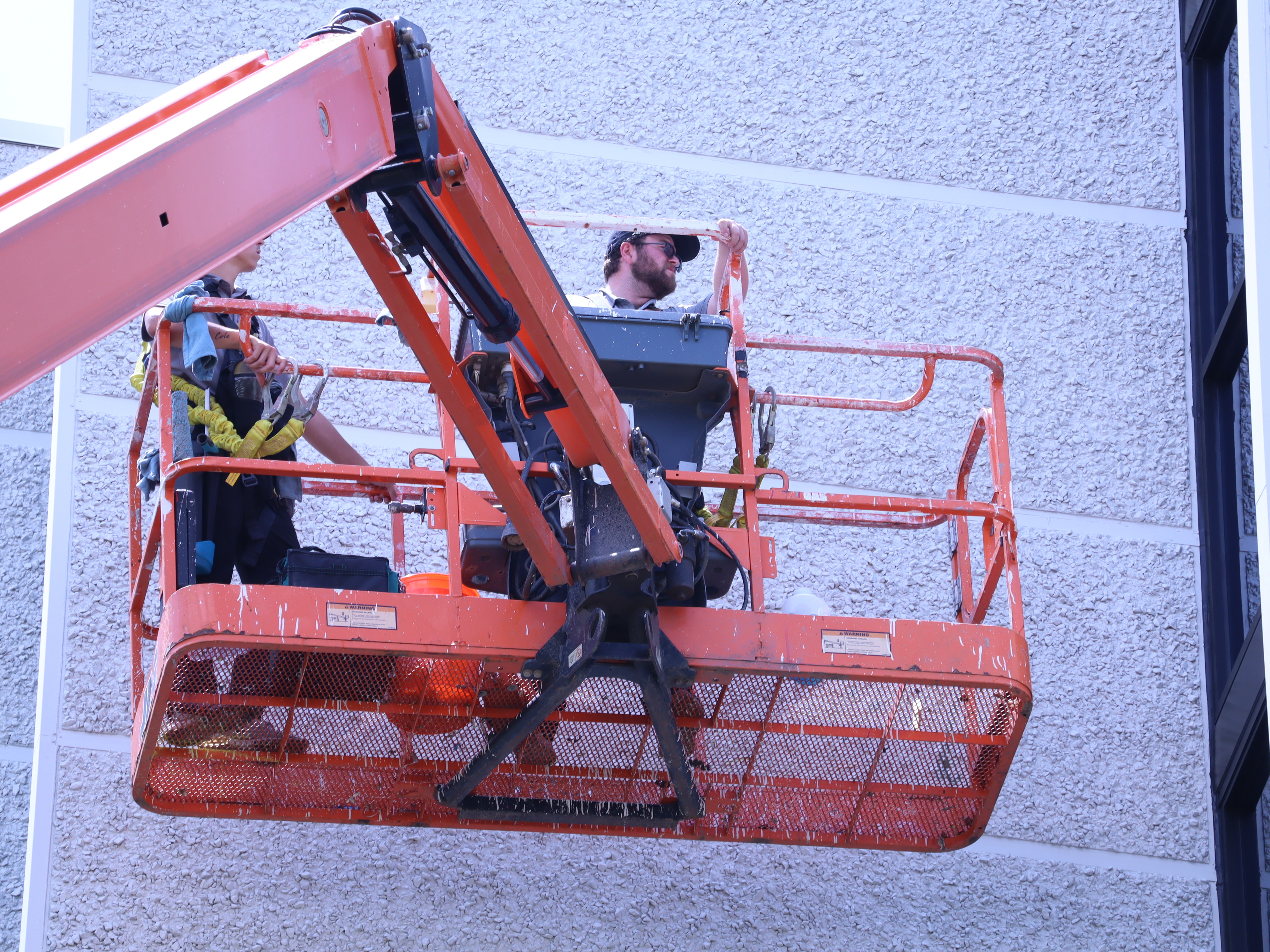
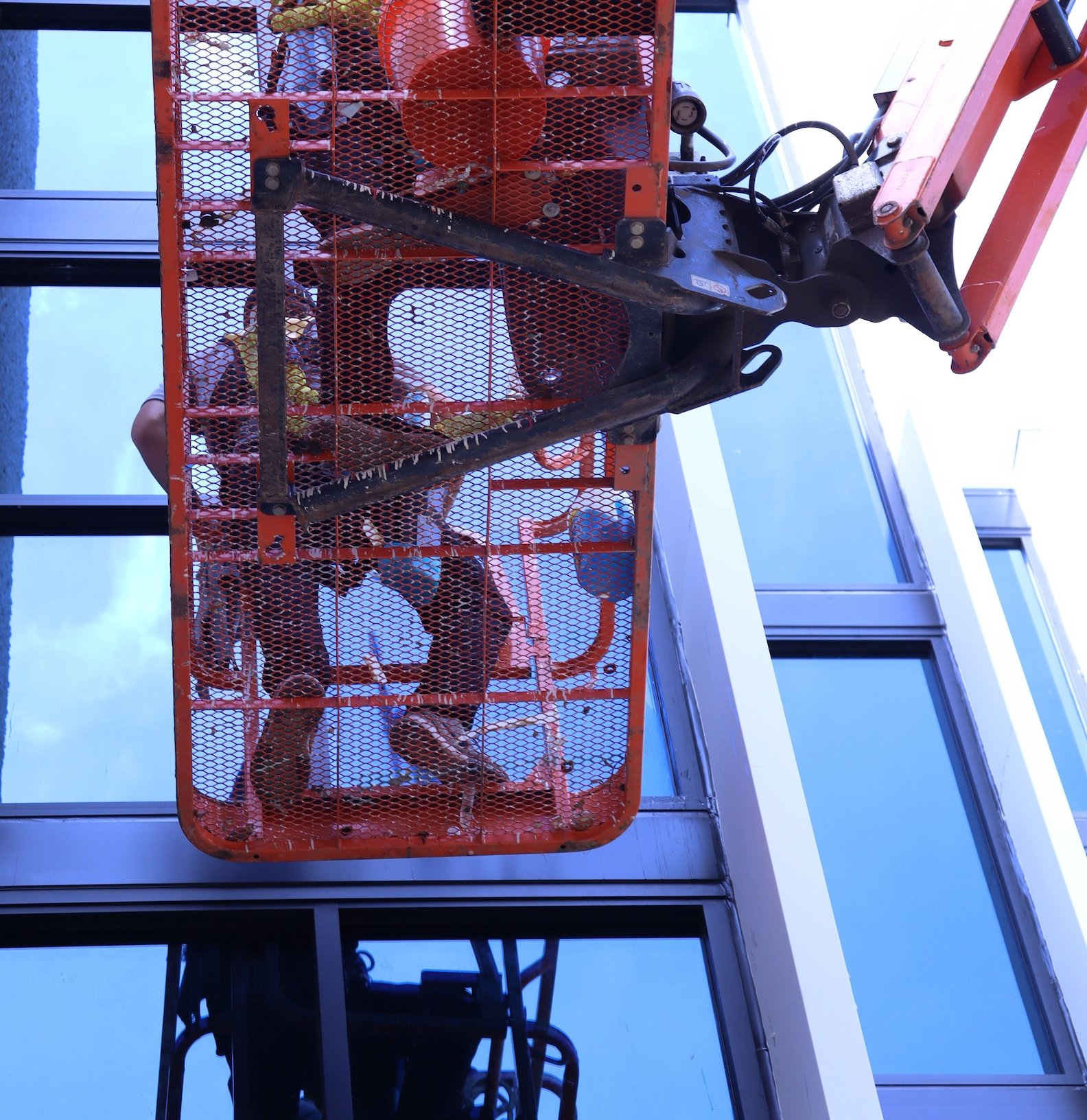
On some properties, large sections of exterior glass can be serviced using relatively straightforward methods. Other buildings may require aerial lifts, roof access, suspended equipment, rope descent systems, or a combination of methods.
The difference isn't always height.
Sometimes it's what's between the technician and the window.
OSHA specifically requires employers using aerial lifts to evaluate the worksite and identify potential hazards so the appropriate equipment and controls can be selected. OSHA's guidance calls attention to factors including unstable surfaces, slopes, overhead obstructions, power lines, severe weather, and people working or walking nearby.
Read OSHA's guidance on aerial lift safety and work-area inspections.
That becomes especially relevant on commercial properties where equipment may need to operate around parking lots, sidewalks, entrances, landscaping, or other structures.
A window located 25 feet above an open, accessible area can present a completely different job from a window located 25 feet above a large architectural canopy.
The height didn't change. The access did.
Modern Architecture Can Create Unexpected Challenges
Modern commercial buildings can be beautiful.
They can also create some interesting situations for the people responsible for maintaining them.
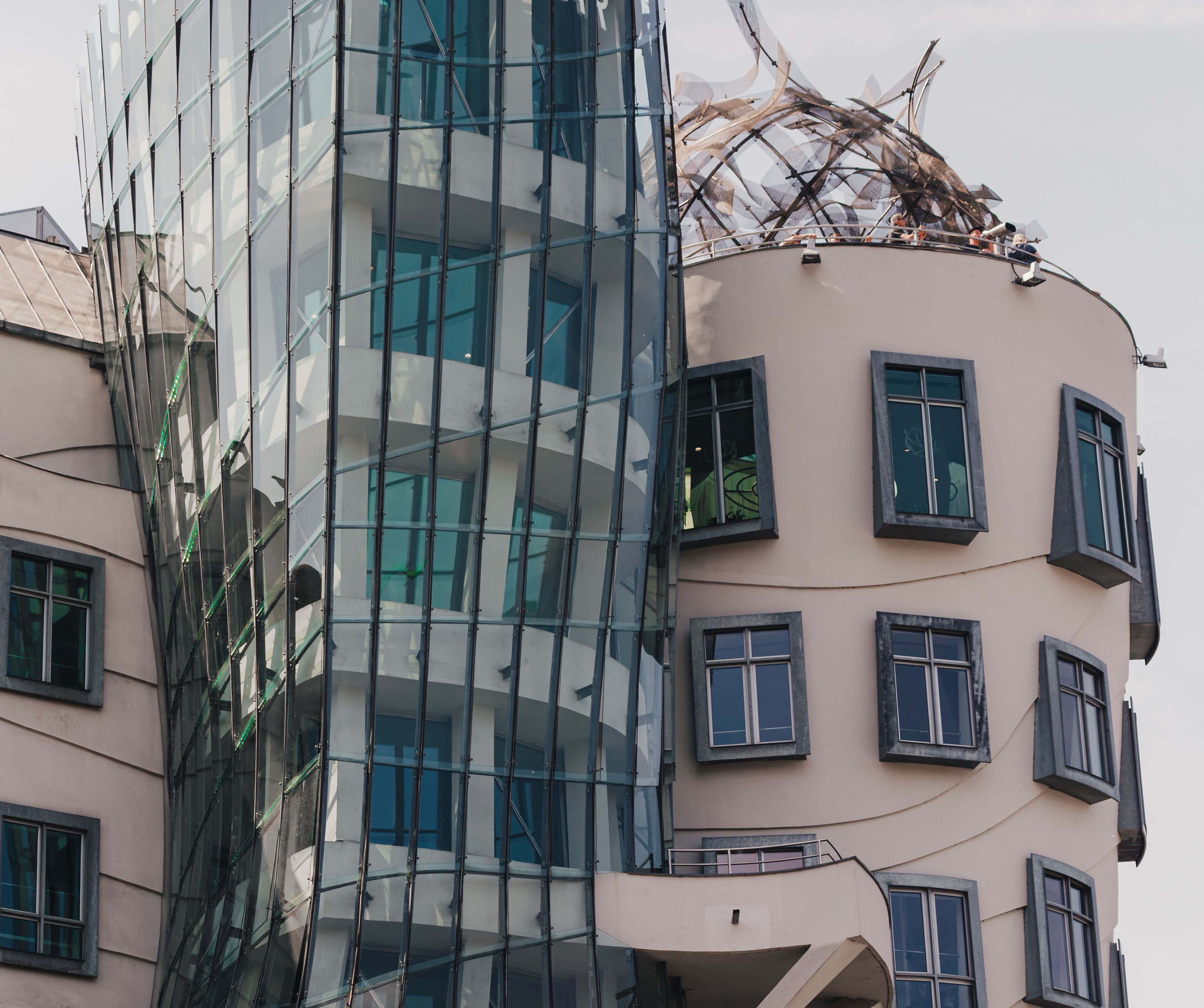
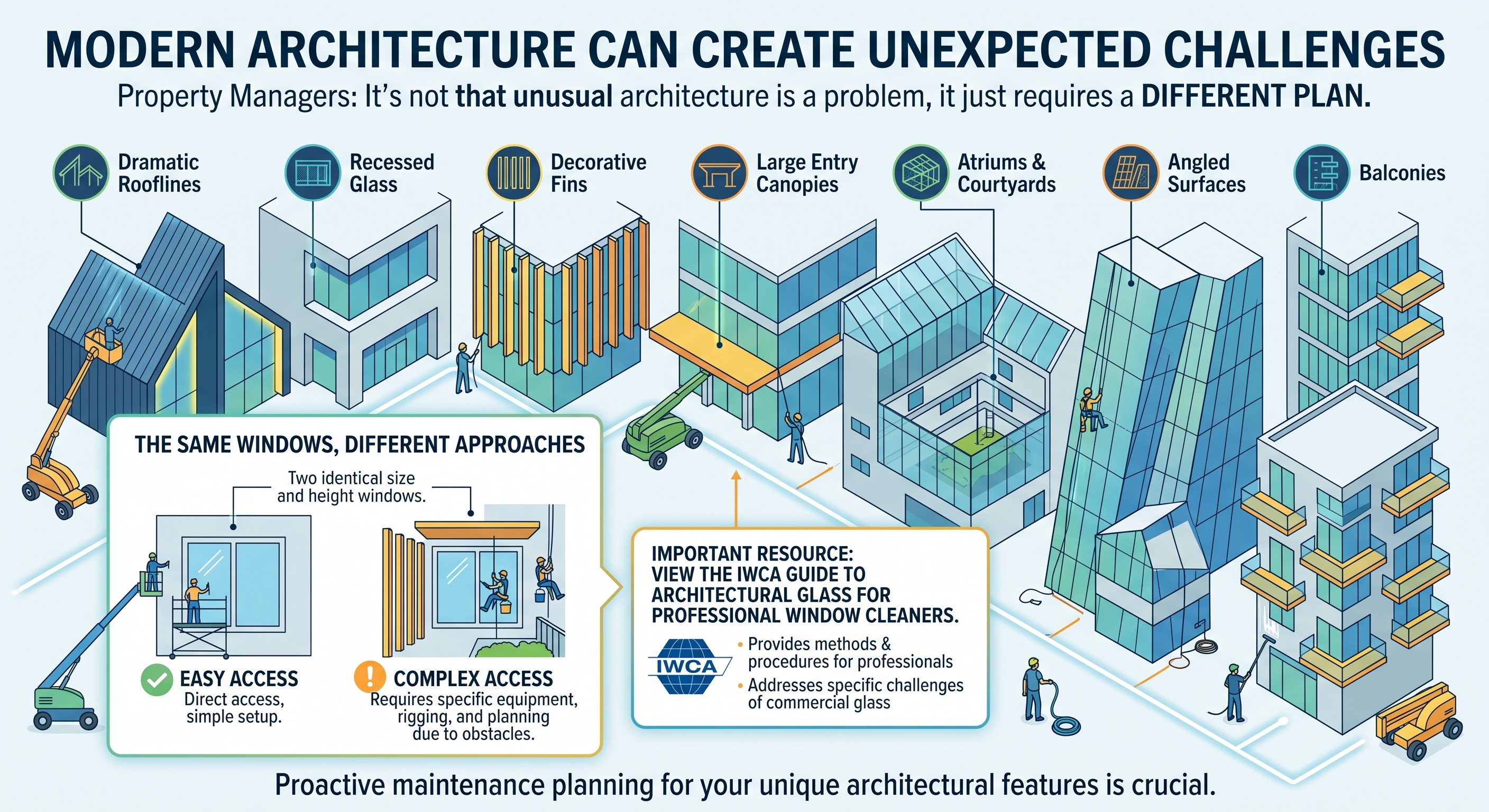
Architects may incorporate recessed glass, dramatic rooflines, decorative fins, large entry canopies, atriums, angled surfaces, balconies, courtyards, and other features to give a property its identity.
Those architectural choices can also influence how the exterior glass will eventually be accessed.
The International Window Cleaning Association's Guide to Architectural Glass for Professional Window Cleanersspecifically addresses commercial architectural glass and the methods and procedures professionals may need to consider when cleaning it.
View the IWCA Guide to Architectural Glass for Professional Window Cleaners.
The important point for a property manager isn't that unusual architecture is a problem.
It's that unusual architecture often requires a different plan.
Two windows could be exactly the same size and exactly the same height but require completely different approaches simply because of what's underneath, above, or surrounding them.
Sometimes the Obstacle Isn't the Building
Architecture also affects what gets built around the glass.
Landscaping is a great example.
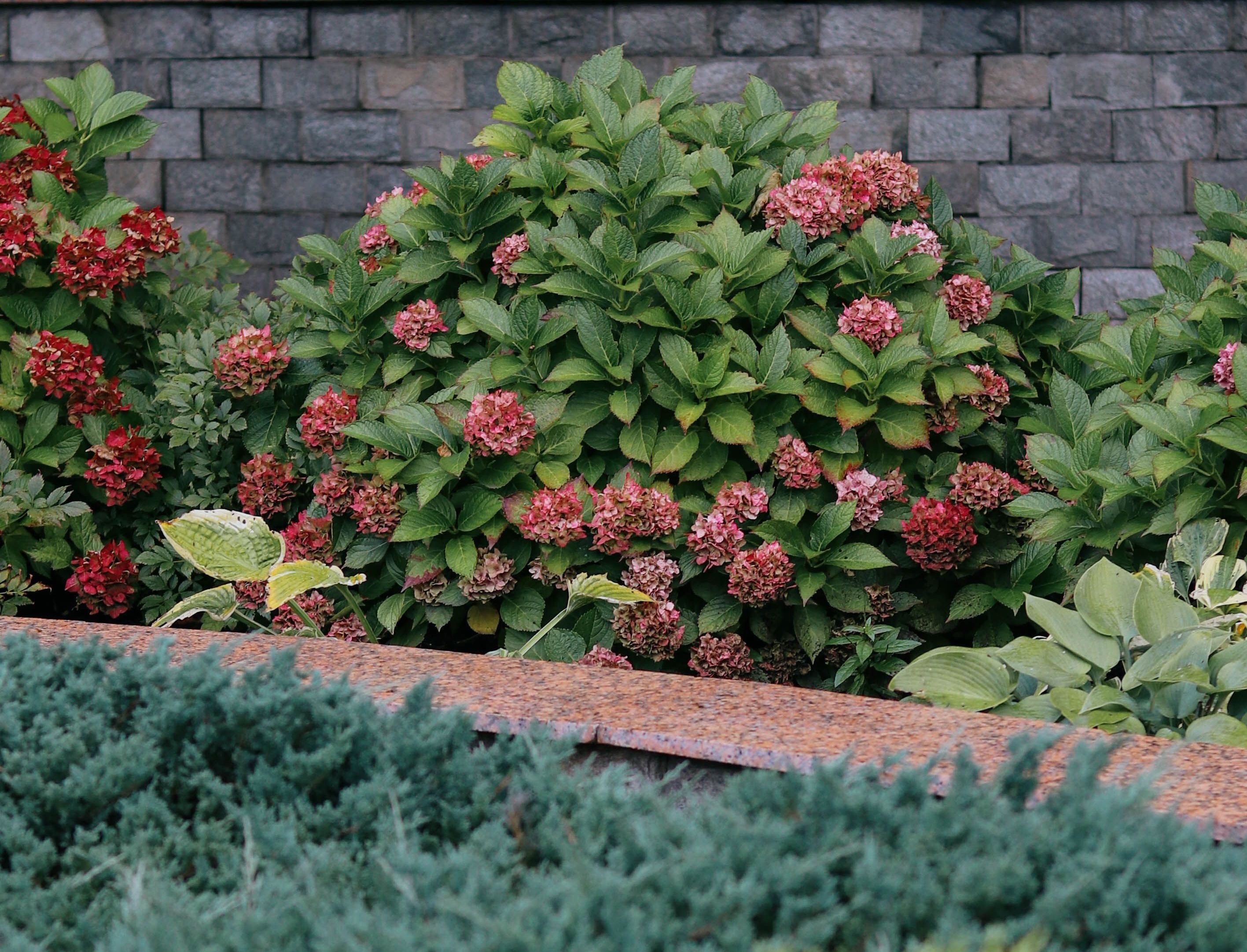
Trees, flower beds, retaining walls, fountains, awnings, signage, outdoor seating areas, decorative structures, and pedestrian areas can all affect where technicians or equipment can be positioned.
The same is true for parking lots and driving areas.
An aerial lift may technically have enough reach to access a particular window, but that doesn't automatically mean the equipment can safely be positioned where it needs to go.
OSHA recommends inspecting aerial-lift work areas for conditions including drop-offs, unstable surfaces, slopes, overhead obstructions, debris, nearby people, power lines, and severe weather before operation.
OSHA outlines those aerial-lift work-area considerations here.
That is why an experienced window cleaning company should look at more than pictures of the glass.
We need to understand the environment surrounding it.
Roof Design Matters Too
For certain elevated buildings, the challenges don't end when you reach the roof.
If a rope descent system is being considered, the building itself becomes part of the access equation.
OSHA's regulations for rope descent systems require building owners to provide written confirmation that applicable anchorages have been identified, tested, certified, and maintained to meet specific requirements before those anchorages are used.
You can read OSHA's requirements for scaffolds and rope descent systems here.
OSHA also specifically notes that rope descent systems are commonly used for exterior building cleaning, including window cleaning.
OSHA's Walking-Working Surfaces FAQ explains rope descent systems in more detail.
This is a perfect example of why simply knowing that a building is eight, ten, or twenty stories tall doesn't tell you everything you need to know.
The roof configuration, available anchorages, edges, obstructions, and overall building design can all become part of determining how the glass will be accessed.
The Shape of the Building Can Affect Efficiency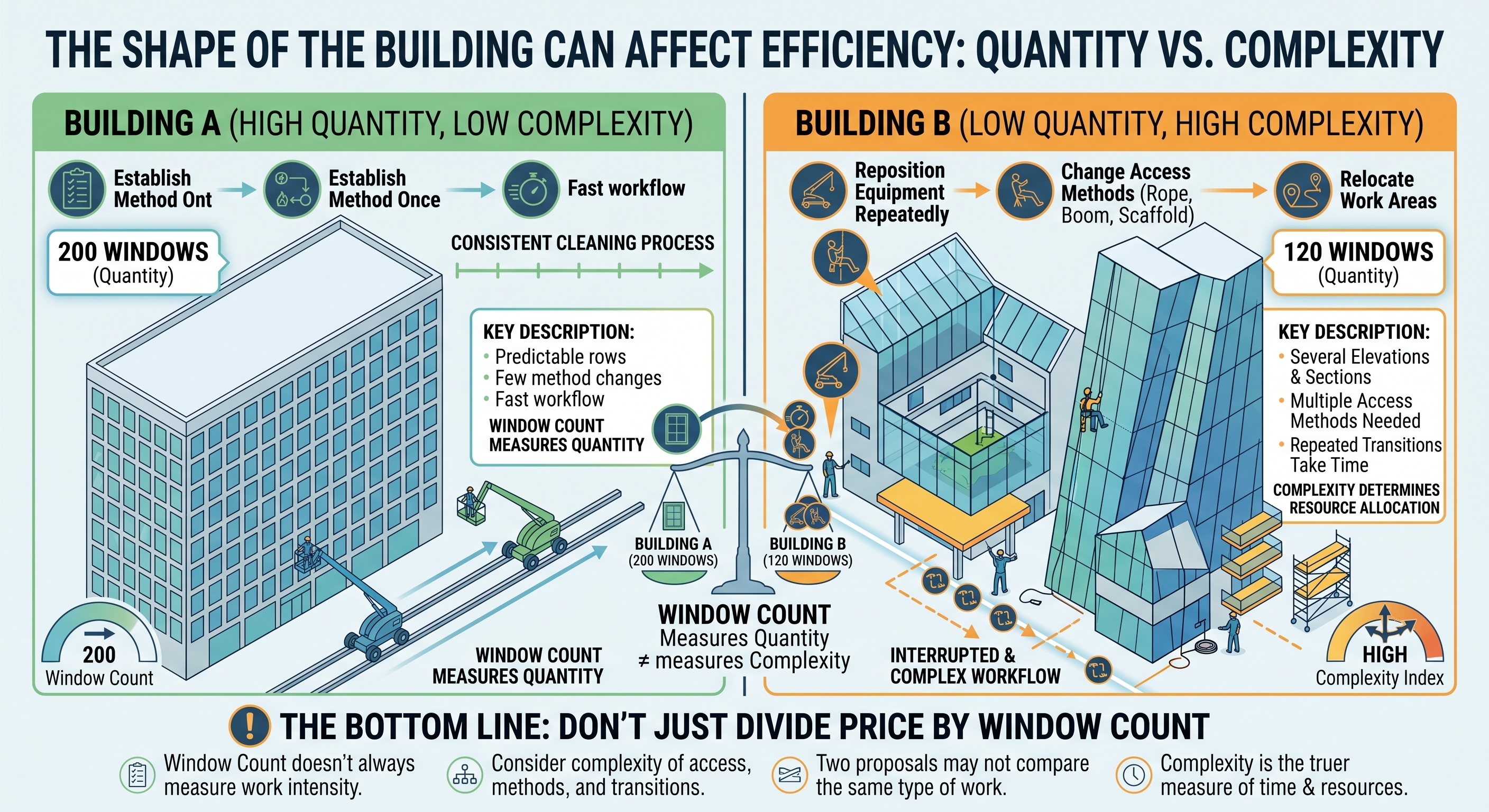
Architecture doesn't only determine whether a window can be reached.
It can also affect how efficiently technicians can move through the property.
Consider a building with 200 nearly identical windows arranged in predictable rows.
Once the crew establishes the appropriate cleaning method, the process can become relatively consistent as they move across the property.
Now compare that with a building containing 120 windows spread across several elevations, courtyards, entrances, rooflines, and architectural sections.
The second building has fewer windows, but technicians may need to repeatedly reposition equipment, change access methods, relocate work areas, or move between different sections of the property.
Those transitions take time.
Window count measures quantity. It doesn't necessarily measure complexity.
That's why looking at two proposals and simply dividing the price by the number of windows doesn't always give you an accurate comparison.
You may not be comparing the same type of work.
This Is Why Site Evaluation Matters
For straightforward properties, photos, measurements, building plans, and other information may sometimes provide enough detail to begin estimating a project.
More complicated properties are different.
Seeing and evaluating the building can reveal things that aren't obvious from a window count.
Where can equipment be positioned?
Can technicians move around the entire perimeter?
Are there locked or restricted areas?
Are there multiple roof elevations?
Is landscaping blocking access?
Will an entrance need to remain operational while work is taking place?
Are there architectural features directly underneath the glass?
Are there areas where pedestrians or vehicles will be moving near the work?
These aren't small details. They can determine how the entire project needs to be approached.
OSHA describes hazard identification and assessment as a proactive process that includes reviewing potential hazards, conducting workplace inspections, considering nonroutine situations, and determining the severity and likelihood of potential incidents.
Read OSHA's guidance on hazard identification and assessment.
In other words, understanding the environment before the work begins isn't just about making the job easier.
It's part of properly planning the work.
Architecture Can Affect Your Quote
This is also why comparing commercial window cleaning quotes based solely on the number of windows can be misleading.
Two buildings can have roughly the same amount of glass and still require very different amounts of labor and equipment.
A quote may need to account for things like:
- Access method
- Equipment requirements
- Building height and configuration
- Equipment repositioning
- Landscaping and ground conditions
- Interior access
- Pedestrian and vehicle traffic
- Safety requirements
- Setup and breakdown time
- Areas requiring specialized access
This doesn't mean complicated architecture automatically makes a project expensive.
It means a commercial window cleaning quote should reflect the actual building rather than an assumption based on its size.
That's an important distinction when comparing proposals.
If one company has thoroughly evaluated how the building will actually be cleaned and another has simply estimated the amount of glass, the two numbers may represent very different scopes of work.
Bigger Doesn't Always Mean Harder
Some large commercial properties can be relatively straightforward when they contain accessible, repetitive sections of glass.
Meanwhile, a much smaller property can require significantly more planning because nearly every section presents a different access challenge.
That's one of the interesting things about commercial window cleaning.
From the parking lot, you see windows.
The crew evaluating the same building may see rooflines, setbacks, anchorages, landscaping, pedestrian routes, equipment positioning, surface conditions, access zones, and dozens of other details that determine how those windows can safely and efficiently be cleaned.
The building's size tells us how much work exists. Its architecture helps determine how that work has to happen.
What Property Managers Should Take From This
If you're requesting commercial window cleaning quotes, don't be surprised when a company wants more information than the number of windows or approximate square footage.
Questions about access, architecture, surrounding property conditions, and building use aren't unnecessary complications.
They're often signs that someone is trying to understand the job before putting a number on it.
A good estimate shouldn't just answer:
“How much glass is there?”
It should also answer:
“What is actually required to clean it?”
That's the difference between estimating a building from a spreadsheet and developing a cleaning plan around the property that actually exists.
Need Help Building a Cleaning Plan for Your Property?
Every commercial building is different, and your window cleaning plan should reflect that.
At Squeegee Squad Tulsa, we look at the property, glass, access requirements, surrounding environment, equipment needs, and cleaning frequency before recommending an approach.
Whether you're managing a straightforward office building or a property with challenging architectural features, the goal is the same:
Create a predictable cleaning plan that works for your building instead of forcing your building into a generic plan.
Contact Squeegee Squad Tulsa to discuss a commercial window cleaning plan for your property.
About the Author:
Treshaun Williams is the Content Manager at Squeegee Squad Tulsa. He documents the people, processes, equipment, and planning behind professional window cleaning throughout the Tulsa area. His content focuses on giving property managers and business owners a clearer look at what happens behind the scenes of commercial window cleaning and the factors that can affect their properties. While Tre isn’t a professional window cleaner himself, his role gives him a front-row view of the industry.
Tags: Commercial Window Cleaning, Window Cleaning Education, Property Management, Building Maintenance, Commercial Building Maintenance, Window Cleaning Safety, High-Rise Window Cleaning, Building Access, Window Cleaning Costs, Tulsa Window Cleaning, Oklahoma Window Cleaning, Facility Management