
 By
By
Key Takeaways:
- Most hard water stains can be removed, but not all of them. The longer mineral deposits remain on the glass, the greater the chance they permanently damage the surface.
- Professional restoration methods are much safer and more effective than DIY solutions. Specialized restoration chemicals, professional techniques, and pure deionized water systems can often restore glass without causing additional damage.
- Prevention is far less expensive than restoration. Regular window cleaning helps prevent mineral buildup from becoming permanent glass etching.
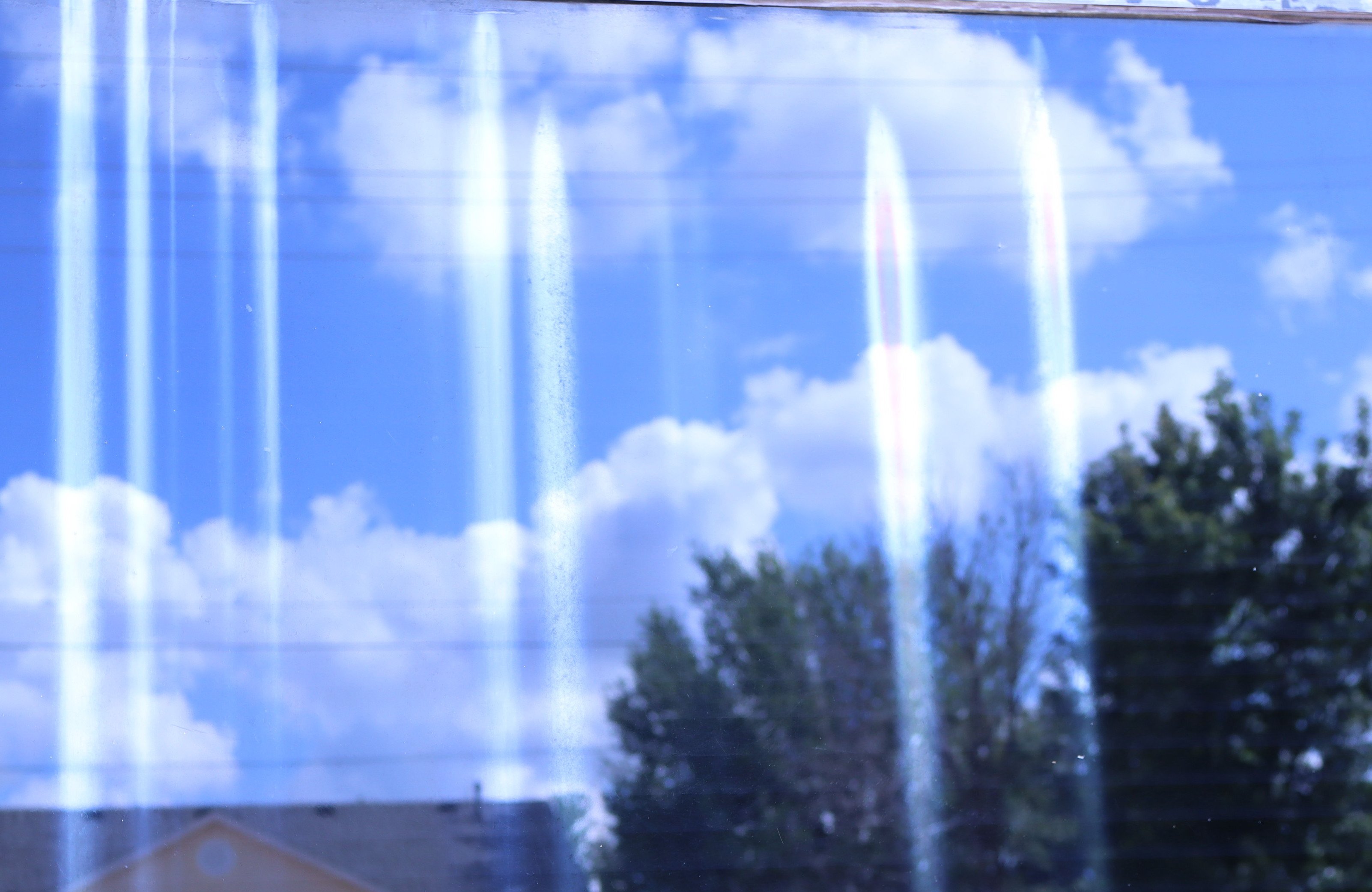
If you manage a commercial property in Tulsa, you've probably looked at your windows after a sprinkler cycle and wondered whether those white stains will ever come off.
It's one of the questions we hear most often.
"Can you actually remove these hard water stains, or is the glass permanently ruined?"
The answer is: it depends on how long they've been there.
Some hard water stains are simply sitting on the surface of the glass and can be professionally removed. Others have been left untouched for so long that they've actually begun eating into the glass itself.
Understanding the difference can save thousands of dollars in unnecessary glass replacement.
Why Tulsa Properties See So Much Hard Water Buildup
Tulsa's municipal water contains naturally occurring minerals, primarily calcium and magnesium. While these minerals are perfectly safe in drinking water, they're not particularly friendly to glass.
Every time sprinkler systems hit your windows, tiny mineral deposits are left behind.
After the water evaporates, the minerals stay.
The next sprinkler cycle adds another layer.
Then another.
Then another.
Over weeks and months, these deposits become increasingly difficult to remove.
Commercial properties often experience the worst buildup because:
- Irrigation systems run multiple times each week.
- Landscaping frequently sprays storefronts and office windows.
- South-facing glass dries quickly, baking minerals onto the surface.
- Large buildings often go longer between cleanings than residential homes.
The result is the cloudy white spotting many property managers eventually notice.
According to the International Window Cleaning Association, hard water deposits are one of the most common forms of glass contamination professional window cleaners encounter.
The Difference Between Mineral Deposits and Glass Etching
This is where things become important.
Many people assume every hard water stain is simply dirt sitting on the glass.
That isn't always true.
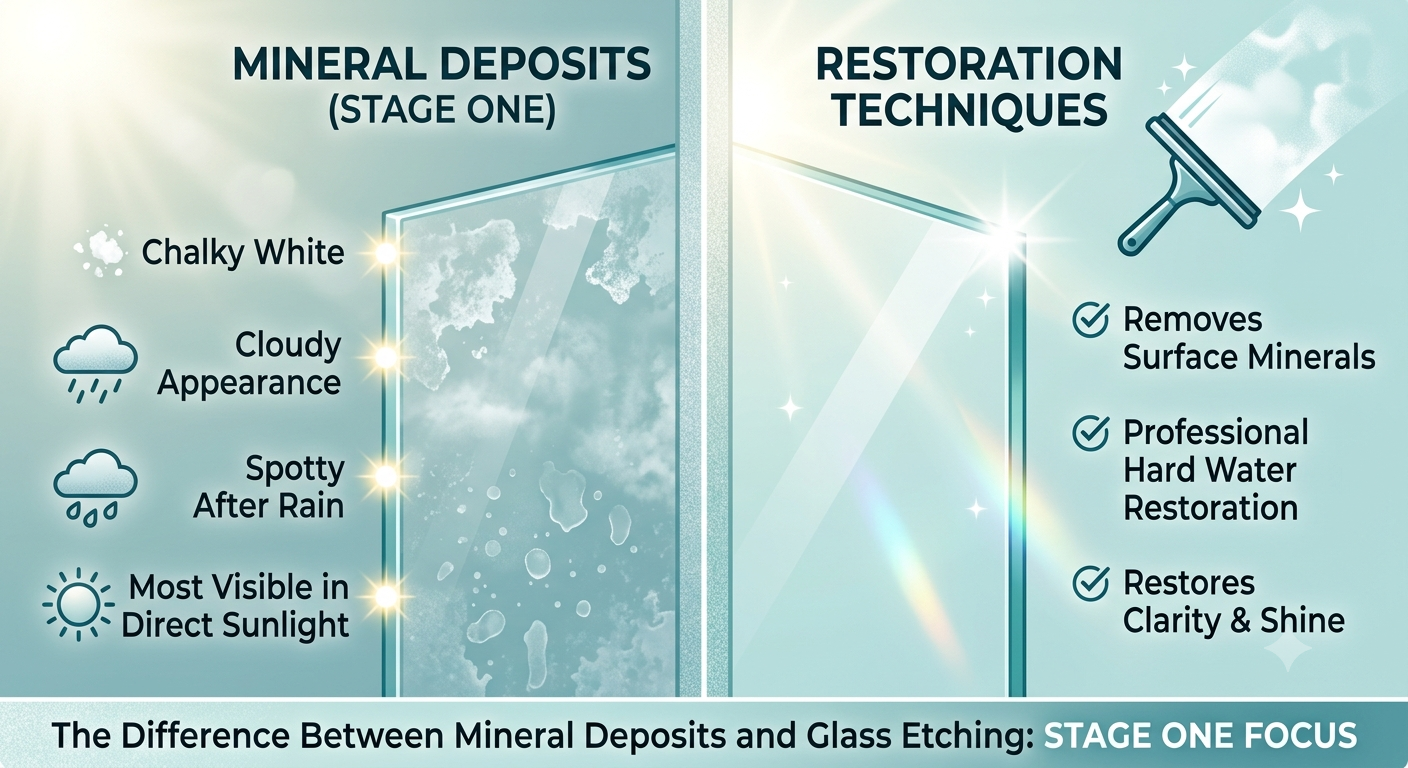
Stage One: Surface Mineral Deposits
When caught early, calcium and magnesium minerals sit on top of the glass.
These stains often appear:
- Chalky white
- Cloudy
- Spotty after rain
- Most visible in direct sunlight
These can often be restored using professional hard water restoration techniques.
Stage Two: Permanent Glass Etching
If minerals remain on the glass for months or even years, they begin reacting with the surface.
Instead of sitting on top of the glass...
They actually start damaging it.
The minerals slowly create microscopic pits in the glass that permanently scatter light.
At this point, the stain isn't really a stain anymore.
It's damaged glass.
Unfortunately, once the glass has been deeply etched, no cleaning process can completely reverse the physical damage.
The Glass Association of North America notes that mineral deposits left untreated for extended periods can contribute to permanent surface damage requiring glass replacement in severe cases.
How Professional Window Cleaners Remove Hard Water Stains
Every situation is different.
Professional restoration typically starts by determining whether the deposits are on the surface or have already etched the glass.
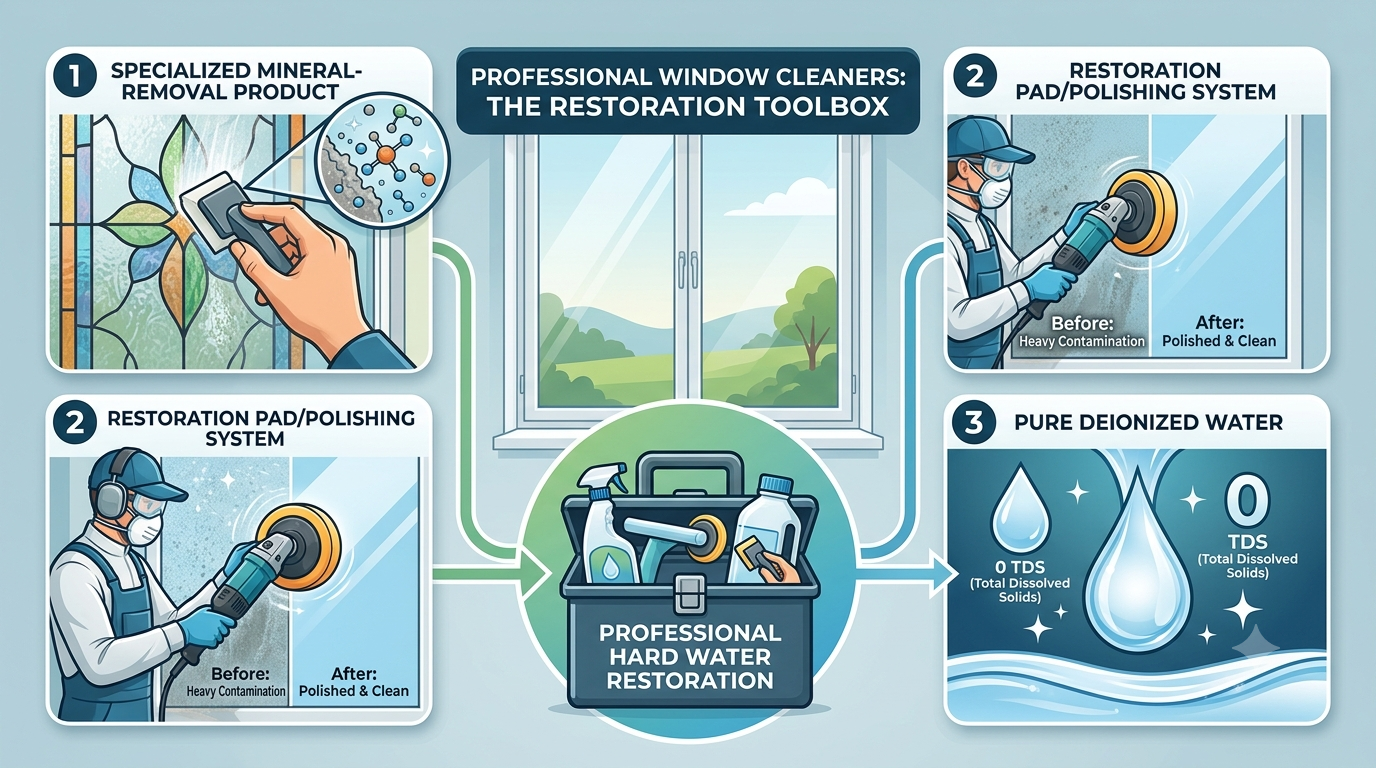
If the minerals are still removable, restoration may involve specialized mineral-removal products designed specifically for glass.
These products dissolve calcium, magnesium, and other mineral deposits without damaging properly manufactured glass when used correctly.
Professionals may also use restoration pads or polishing systems designed specifically for mineral contamination.
Another important tool is pure deionized water.
Why Pure Water Makes Such a Difference
Many commercial window cleaning companies now use water-fed pole systems that clean with purified water instead of traditional tap water.
The water passes through filtration systems that remove nearly all dissolved minerals before it ever reaches the glass.
That means:
- No minerals are left behind.
- Windows dry spot-free without soap residue.
- Future mineral buildup is significantly reduced during routine maintenance.
Pure water doesn't magically erase years of heavy hard water deposits.
Why DIY Hard Water Removal Can Make Things Worse
When homeowners or maintenance staff see stubborn white spots, they often reach for:
- Razor blades
- Steel wool
- Abrasive scrub pads
- Household acidic cleaners
Unfortunately, these methods frequently create new problems.
Scratches, damaged coatings, and chemical staining can sometimes become more noticeable than the original hard water deposits.
Even products marketed for hard water removal should be used carefully because different types of commercial glass may have protective coatings that require specific cleaning procedures.
Prevention Is the Best Investment
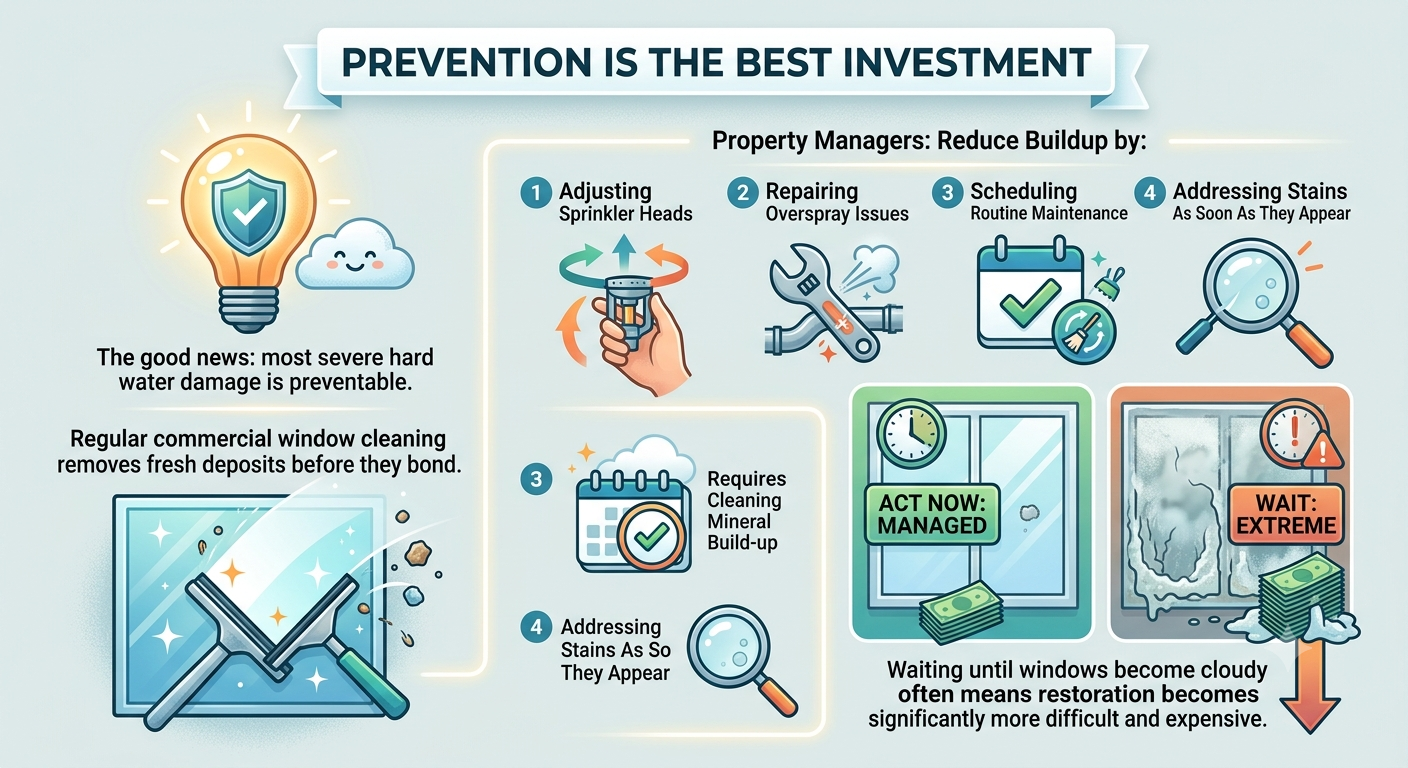
The good news is that most severe hard water damage is preventable.
Regular commercial window cleaning removes fresh mineral deposits before they have time to bond with the glass.
Property managers can also reduce buildup by:
- Adjusting sprinkler heads away from windows.
- Repairing overspray issues.
- Scheduling routine maintenance cleanings.
- Addressing hard water stains as soon as they appear.
Waiting until the windows become cloudy often means restoration becomes significantly more difficult and expensive.
What You Should Do
If your windows have developed white spots or cloudy mineral deposits, don't assume the glass needs to be replaced.
A professional inspection can determine whether the buildup is still removable or whether permanent etching has already occurred. The sooner hard water stains are addressed, the greater the chance the glass can be fully restored.
For commercial properties throughout Tulsa, regular maintenance combined with proper restoration techniques can often extend the life of your windows and help avoid costly glass replacement.
How to Take Action Now
To learn more about our team or our services, please visit our website today or call us at (918) 331-9905.
Frequently Asked Questions
Can all hard water stains be removed from commercial glass?
Not always. It depends entirely on how long the minerals have been sitting there. If caught in "Stage One" (where the calcium and magnesium are just sitting on top of the glass), they can usually be professionally restored. However, if they are left untreated for months or years, the minerals chemically react with the glass, causing permanent microscopic pitting (etching) that cannot be cleaned away.
Why is hard water such a common problem for Tulsa properties?
Tulsa’s municipal water is rich in natural minerals like calcium and magnesium. When commercial sprinkler systems regularly spray windows and the hot Oklahoma sun quickly dries the water, it leaves these minerals baked onto the glass. Over multiple irrigation cycles, these deposits build up into a tough, cloudy crust.
Can my in-house maintenance team use DIY methods to clean these stains?
We highly advise against it. Stubborn hard water often leads staff to use razor blades, steel wool, or harsh household acids. On commercial glass which often has specialized energy-efficient or reflective coatings these aggressive methods can easily cause permanent scratches and chemical haze, making the damage far worse and more expensive to fix than the original stain.
What is "pure water" cleaning, and does it remove hard water stains?
Pure water cleaning uses specialized deionized filtration systems to strip all dissolved minerals from tap water before it touches your windows. While pure water is not a magic eraser for existing, heavily baked-on mineral crusts (which require specialized restoration chemicals), it is the absolute best method for routine maintenance to ensure new stains never form.
How can I prevent hard water buildup on my building's windows?
The most cost-effective prevention strategies include:
- Adjusting sprinkler heads so they don't spray directly onto the building’s envelope.
- Fixing irrigation overspray and wind-drift issues.
- Scheduling routine commercial window cleanings to wash away fresh mineral deposits before they have a chance to bond and etch the glass.
About the author
Tre is the Content Manager at Squeegee Squad Tulsa, where he specializes in creating educational content that helps property owners and facility managers make informed decisions about exterior building maintenance.