 By
By
Key Takeaways
- Opportunity changes lives more effectively than a larger paycheck alone.
- Small business owners have a unique ability to influence the future of their employees.
- Mentorship, encouragement, and personal investment often create lasting change.

Everyone's talking about Oklahoma State Question 832 right now.
I'd like to talk about something else.
I don't want to talk about minimum wage. I want to talk about minimum opportunity. And unlike a ballot measure, it's a problem that small business owners can actually do something about.
The Wrong Diagnosis
The people working entry-level and unskilled labor jobs in Tulsa aren't always struggling because their hourly wage is too low. Many are struggling because somewhere along the way, nobody gave them a clear path forward. Nobody invested in them, encouraged them, or helped them see what they could become.
The reasons are different for everyone. Maybe it was instability at home. Maybe addiction affected their family. Maybe they never had a mentor. Maybe opportunities came along, but they weren't ready to take them.
The details vary. The pattern doesn't.
Too many people have never had someone look them in the eye and say:
"You can do more than this."
That's the real problem.
You can increase someone's paycheck and leave every other barrier in place: the lack of skills, the lack of confidence, the lack of mentorship, and the lack of stability.
The check gets bigger.
The ceiling stays the same.
What Investing In Opportunity Actually Looks Like
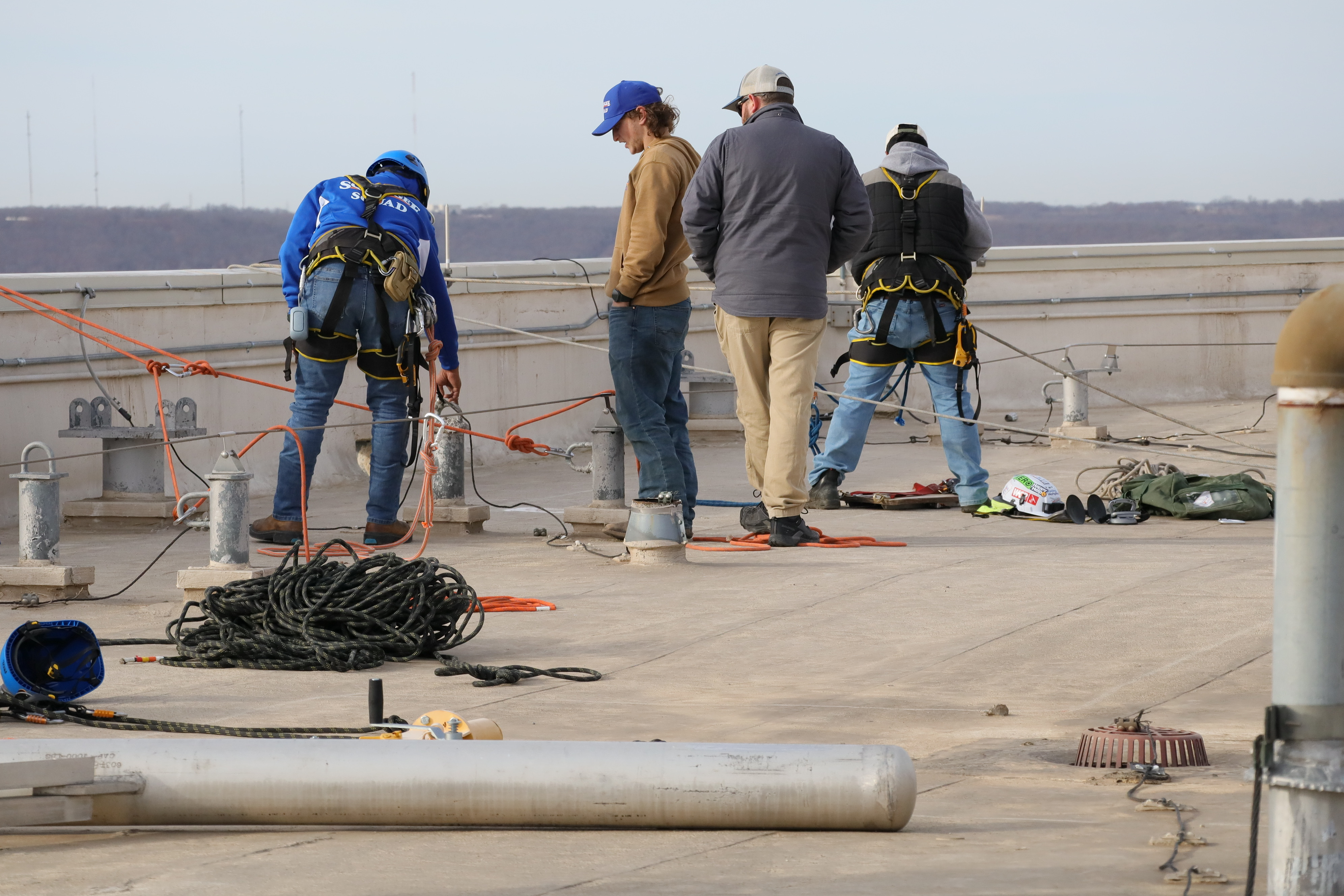
At Squeegee Squad, we've seen firsthand what happens when an employer decides that their responsibility to an employee doesn't end when the shift does.
One of our team members came to us five years ago. He was young, quiet, and unsure of what he was capable of. Today he owns his own home and leads one of our window cleaning crews while building his skills in audio engineering in his free time.
Another team member joined us four years ago. At the time, he was single and dealing with legal troubles from his past. Today he's married, owns a home, has launched a small business on the side, and recently welcomed his second child into the world.
Two completely different stories.
One common thread.
Someone gave them a chance. Then gave them another one. And another one. Until they found their footing.
Over the years, we've watched employees buy their first vehicle, take college classes, pay off debt, beat addiction, purchase their first home, take their first real vacation, and launch businesses of their own.
We've even created a fund specifically to help employees seize opportunities when they arise. Because sometimes the only thing standing between someone and their next step is a few hundred dollars they don't have.
Sometimes opportunity is closer than people think.
Forbes highlights this idea in a blog they posted.
The Excuses We Make
Investing in people sounds great in theory.
Until it becomes personal.
That's when many of us start making excuses.
"I'm An Introvert"
I'll be the first to admit it. I'm an introvert.
Investing in people takes energy. It requires conversations, attention, and caring about things that happen outside of work. That's not always easy. Sometimes it's much easier to keep your head down and focus on the business.
I understand that temptation.
But here's what I've learned.
Watching people succeed fills my tank far more than keeping my distance ever could.
Watching someone buy their first house. Watching someone overcome a major obstacle. Watching someone discover what they're capable of.
Those moments matter.
Introversion is real.
But sometimes it's also an excuse.
"He Dug His Grave. Now He Has To Lie In It."
This mindset is more common than many people want to admit.
Everyone is responsible for their choices. That's true. But treating employees as purely transactional relationships doesn't help anyone.
You don't build loyalty that way. You don't build leaders that way. And you certainly don't build stronger communities that way.
At some point, "people get what they deserve" stops being wisdom and starts becoming a convenient way to avoid caring.
That's not leadership.
That's self-protection.
"I Determined My Own Destiny. So Should They."
Most business owners are proud of what they've built.
They should be.
Building a business is hard.
But before we get too impressed with ourselves, it's worth asking a simple question:
How did we get here?
I can trace much of my own story back to a single moment in sixth grade. My PE teacher noticed something during a volleyball unit. Nothing extraordinary—just another day in the gym. But she pulled my mom aside and suggested I try out for the team.
One conversation.
One observation.
One person paying attention.
That moment eventually led to a volleyball scholarship at a Division I SEC school, and it changed the direction of my life.
One person.
One opportunity.
One decision to invest in someone else's potential.
I'd be willing to bet you have a story like that too.
A coach. A teacher. A boss. A mentor. A family friend.
Someone who saw something in you before you saw it in yourself. Someone who opened a door. Someone who gave you a chance.
None of us got here alone.
Someone invested in us first.
The question is simple:
Who are we investing in now?
"They'll Take Advantage Of My Generosity"
This is the objection I hear most often.
What if they take advantage of me?
It's a fair question.
Because sometimes they will.
Sometimes you'll invest in someone who leaves. Sometimes you'll help someone who disappoints you. Sometimes you'll give more than you get back.
That's reality.
But it's still worth it.
The fear of being taken advantage of has probably prevented more opportunity than any policy ever could.
You cannot build a culture of opportunity from behind a wall.
Some people will let you down.
Invest anyway.
The Problem We Can Actually Solve
Here's what makes these conversations important.
We spend a lot of time discussing what governments should do, what policies should do, and what programs should do. Those conversations matter. But they can also make it easy to forget what we can do.
Small business owners occupy a unique position in their communities. We meet people at the beginning of their story. We hire people who are still figuring things out. We get opportunities to influence lives in ways most institutions never will.
That's a responsibility.
And it's also an opportunity.
The minimum opportunity problem is real. It's in Tulsa. It's in our workforce. It's in communities all across the country.
And it won't be solved by legislation alone.
It gets solved when employers decide that developing the whole person is part of the job not just developing the employee.
We aren't the only ones that think this idea is very important, Vanity Fair supports this topic in one of their blog post.
Final Thoughts
I've spent a lot of time thinking about this issue over the last few years.
Not as a business owner.
As a person.
Because when I look back at my own life, I can clearly see the people who invested in me before I had anything to offer them in return.
A teacher.
A coach.
A mentor.
Someone who saw potential and decided it was worth encouraging.
Most of us can tell a similar story.
That's why I struggle with the idea that opportunity can be solved through policy alone.
Opportunity has always been personal.
It starts when one person decides another person's future is worth caring about.
For those of us who own businesses, manage teams, or lead organizations, that's a responsibility we shouldn't take lightly.
We may never know how much impact a conversation, a second chance, or a small act of encouragement can have on someone's life.
But that doesn't make the impact any less real.
In many cases, it changes everything.
Let's Continue The Conversation
If you're a Tulsa business owner, manager, or leader who's passionate about developing people, I'd love to connect.
Some of the best ideas come from honest conversations with other business owners who care deeply about their employees and their community.
If this article resonated with you, reach out to our team.
Let's talk about leadership.
Let's talk about opportunity.
Let's talk about what it looks like to build businesses that help people move forward.
Because every successful person can point to someone who invested in them.
Maybe it's our turn to be that person for someone else.
Tags: Minimum Wage, Bill 832, Workers, Small Business, Tulsa, Money, Oklahoma